Parenting Resources
7 min read
1
Parenting Resources
7 min read
7 min read
7 min read
In a world where screens are everywhere, from tablets and TVs to phones and laptops, it’s no wonder parents are asking: how much screen time is too much for young children?
Screens can entertain, educate, and even connect us, but they can also get in the way of something far more powerful - human connection.
Recently, The Princess of Wales and Professor Robert Waldinger have collaborated on an essay, ‘The Power of Human Connection in a Distracted World’, discussing how the quality of our relationships matters more than almost anything else when it comes to happiness and healthy development, and how the increasing use of technology and screens can impact this.
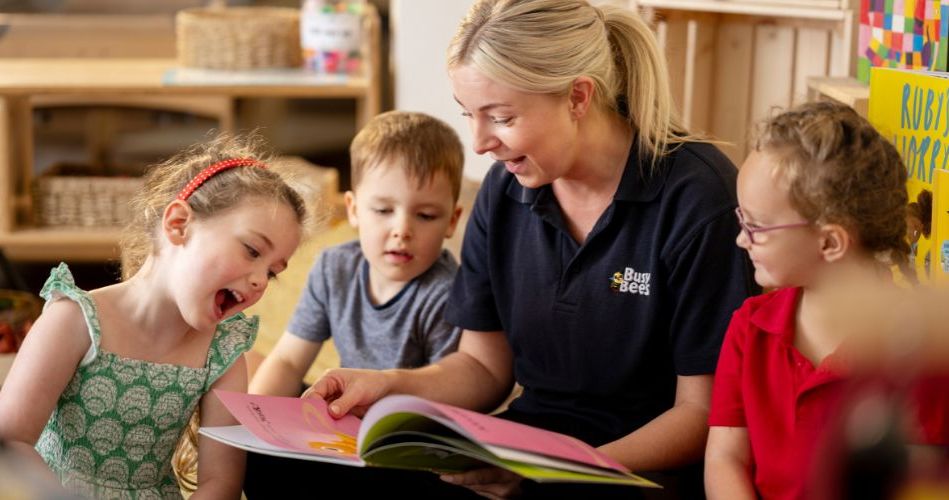
Here at Busy Bees, we pride ourselves on encouraging these early connections through laughter, stories, and play. We understand that technology is an important part of the world around us and ask the question ‘how do we strike a healthy balance between technology and togetherness?’
Let’s explore what screen time really means, the benefits and risks, and how you can use it mindfully in your family life.
“Screen time” simply means any time your child spends in front of a screen — watching, playing, or interacting. But not all screen time is the same. According to research into the different types of screen time by Global Edtech, screen time can be divided into four categories: passive, social, interactive and educational.
Some activities can be enriching and interactive, such as video calling grandparents or playing educational games together. Others, like passive scrolling or background TV, offer less opportunity for engagement and can distract from meaningful moments of connection.
No screen time is recommended for children under two years old, however all screen time can’t be classed as ‘bad’ for older children; it’s about how it’s used.
Research continues to show that loving relationships and responsive caregiving in the early years are what truly shape a child’s emotional and cognitive development. Findings from the Institute for the Science for Early Years and Youth (ISEY), shows that the brain develops fastest in the first five years of life. During this crucial stage, face-to-face moments help to build the neural connections that support learning and emotional wellbeing. When screens begin to replace these moments, younger children in particular may miss opportunities to learn vital social and emotional skills.
It can sometimes be tempting to turn on screens to keep little ones calm or occupied but using them this way can make it harder for children to learn how to manage their emotions. Gentle reassurance, play, or shared stories are far more effective ways to support their emotional development.
When it comes to screen time, try to focus on balance, here at Busy Bees we recommend considering these questions:
Used wisely, screen time can complement your child’s learning and creativity.
Educational apps and programmes can help develop language, early literacy, and numeracy. Interactive games can build problem-solving skills, while video calls with loved ones can strengthen family bonds, especially when relatives live far away.
The key is shared screen time. Watching, playing, and exploring together helps turn digital experiences into opportunities for real connection. When you talk about what’s on the screen, ask questions, or join in, your child is not just consuming, they’re learning and bonding with you.
As young children begin exploring the digital world, it’s important to make sure that the experience is a safe one.
Always use parental controls on devices, choose age-appropriate apps and programmes, and keep screens in shared family spaces rather than bedrooms. For preschoolers and younger children, it’s best to explore online content together, so you can help them make sense of what they see and answer their questions in real time.
At this age, your presence is their greatest protection, and your guidance helps build the healthy, confident digital habits they’ll carry into later childhood.
The World Health Organisation (WHO) offers guidance on healthy screen habits for young children:
These aren’t strict rules but helpful benchmarks. What matters most is maintaining balance and ensuring that screens don’t replace the time children need to move, play, explore, and connect with others.
Here are some practical tips to help you manage screen time while keeping connection at the heart of family life:
Screens should enhance life, not replace it. Prioritise outdoor play and messy fun for boredom busting and encourage reading books and stories to develop children’s imagination.
Ultimately, the goal isn’t to ban screens — it’s to balance them. As The Princess of Wales reminds us, “our undivided attention is the most precious gift we can give another person.”
In truth, there’s no single definitive answer to the question of screen time for children. Instead, it’s a case of understanding the many variables and making an educated decision based on your child’s needs.
Here at Busy Bees, we focus on play-based learning through our Bee Curious curriculum. Backed by over 40 years of industry leading experience, Bee Curious is designed to encourage a love of books and stories, spark curiosity and build a lifelong love of learning. Read more about our Bee Curious curriculum, or get in touch with one of our experienced centre directors at your nearest centre .
by Busy Bees
Published: 20/10/2025
Share Blog

by Busy Bees 14/10/2026
7 min read

by Busy Bees 13/10/2026
5 min read
by Jenny Shaw 01/09/2026
5 min read

by Busy Bees 29/07/2026
6 min read

by Busy Bees 24/07/2026
7 min read


