Health & Wellbeing
9 min read
1
Health & Wellbeing
9 min read
9 min read
9 min read
As parents, we’re all striving for the same thing: happy children, brimming with energy, eager to explore the world around them with the type of boundless enthusiasm we hope never fades.
But as children grow, so does their world. More and more, they find themselves exposed to disorienting, emotionally taxing and anxiety-inducing situations that’d test even the most well-balanced among us.
Whether it’s the separation anxiety that can accompany starting their nursery journey or the difficulties of navigating the world with special educational needs, children’s emotional well-being is constantly challenged.
As you can imagine, supporting your child’s emotional well-being is a vital part of helping them develop into a happy, confident little person and prevent the type of long-term damage that can be caused when emotions are left unchecked.
We’re (thankfully) a long way from children’s mental health being an afterthought, with nurseries and schools alike paying close attention to how little ones under their care are coping.
In this article, we’ll unpack the topic of childhood well-being in depth, offering expert-approved tips on how to support your little one’s emotional well-being and, crucially, how to identify if something’s not quite right. We’ll discuss:
So, what exactly do we mean by children’s emotional health? And is it the same thing as children’s mental health?
In children (and adults), emotional well-being refers to a person’s ability to engage with the world in a positive way, showing resilience when times get tough and developing strong bonds with others.
But it’s more than that. It’s the ability to self-regulate their mood and emotions, and to communicate their feelings with caregivers.
Unfortunately, the internet is awash with unsubstantiated theories on what a child’s emotional well-being should look like. So let’s bust those myths, shall we?
According to Dr Catriona Amberton, a clinical psychologist with extensive experience in children and adolescent mental health:
“Emotional well-being in young children isn’t about the absence of big feelings. Upset, frustration and emotional outbursts are a normal part of development. What matters most is whether children can be supported to settle and feel understood when those emotions arise.”
Think of it like this: if your child becomes distressed (it’ll happen), you’ll swoop in and offer support, right? Your child’s emotional well-being is, essentially, how they respond to said swoop-age, even if they’re experiencing intense emotions.
On the flip side, if your child struggles to calm down and re-engage even with your support, it might be a sign that they’re struggling.

As your little one develops their vocabulary and emotional understanding, they’ll become more adept at telling you how they feel— often quite directly.
That said, every child develops at their own pace, so don’t worry if your little one can’t tell you that they’re struggling with their emotions; there’ll be telltale signs.
The trick is to pay attention and recognise what’s normal for your little one, and what’s out of character.
Let’s explore some signs your child may be struggling, shall we?
Disclaimer: Before we dive in, it’s important to understand that every child is unique, and some behaviours (e.g., social withdrawal, emotional outbursts) can reflect temperament, developmental stage, and even neurological differences.The below advice is for preschool aged children and over.
With that in mind, the following sections won’t apply neatly to every child, so it’s best to understand what’s normal for your little one.
Challenging behaviour
Perhaps the most obvious sign that your little one is grappling with their emotions is also the most frequently overlooked, with angry outbursts often dismissed as ‘tantrums’ and chalked up to, well… being children.
But the reality is far more complex.
You see, behaviour you find challenging isn’t just defined as your little one stomping their feet or throwing their toys. Of course, it can be those things, but not exclusively.
Challenging behaviour can also include shouting, name-calling, and threat-making.
If your little one is acting with more hostility than usual, it could be a sign that something’s bothering them, but they don’t know how to handle it.
That said, certain ‘challenging’ behaviours (e.g. shouting, name-calling, taking items) aren’t entirely unusual as your little one develops. In fact, they are natural parts of learning boundaries, social rules, and so on.
So it’s important to make a distinction between:
For Dr Amberton, this distinction is hugely important.
“Many behaviours that worry parents, such as shouting, testing boundaries or tearfulness, are part of how young children learn to communicate and cope. These become more concerning when they are intense, persistent, or don’t settle with adult support.”
For example, if your little one becomes frustrated and yells at you because you’ve, say… asked them to put away the bricks before going outside, that’s occasional and situational. They’re peeved, but they’ll settle.
If they’re experiencing frequent angry outbursts, that get worse, and don’t seem to have any obvious trigger, it may be a sign that something’s off.
The key is knowing your little one’s responses and keeping an eye on how they’re generally behaving over a given period.
Loss of interest in play
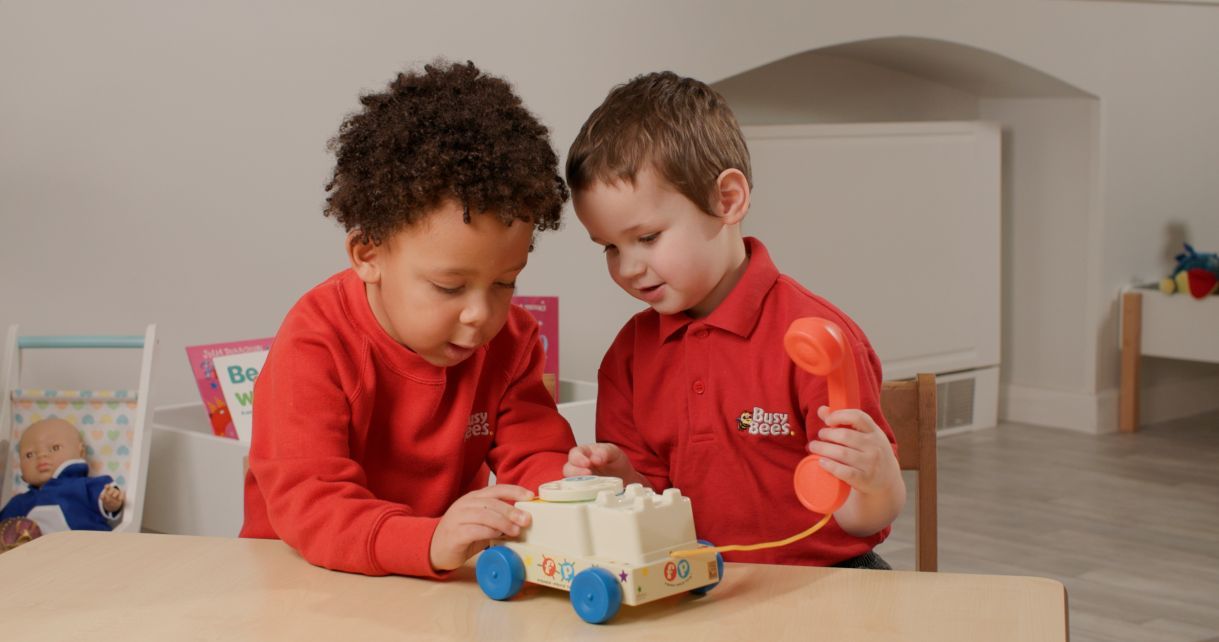
Depending on your little one’s preferences, play could mean any number of activities, including playing with favourite toys, role-playing their favourite characters, or simply tearing around the garden.
In fact, play can look wildly different for each child, and can include construction, sensory activities, or even simply observation.
It’s nothing to worry about If your little one doesn’t much care for toy-based or imaginative play.
And so, the key indicator for concern isn’t how your child plays, but whether there’s been a sustained change in their usual pattern—especially if there’s also less enjoyment or engagement with adult support.
Regression in skills
As a parent or caregiver, you’ll be highly familiar with your little one’s skills, both physical and cognitive, and any regression in those skills could be a sign that they’re struggling with their emotional well-being.
For example, if your little one is typically quite well-spoken (for their age/developmental stage) but they return to using ‘babyish’ vocalisations or tone of voice, that could be considered a skill regression.
Keep an eye on their skills and sit them down for a chat if you notice any skill regression.
That said, it’s worth noting that a regression in skills can occur for many reasons and may not always be an indicator of emotional difficulties.
For example, it’s not unusual for children to experience temporary skill regression for a number of reasons including:
In some cases—such as with autistic children—periods skill regression can occur without any underlying emotional issue.
With all that said, it’s worth keeping in mind that skill regression may not necessarily be a sign that your child is struggling emotionally and can be a normal response to change.
Sleep disturbances

At some point, every child will experience sleep disturbances, no different to adults.
But whether it’s being unable to drift off, waking up much earlier than usual, or experiencing nightmares, ongoing sleep disturbances can be a sign that your child is struggling with something linked to their emotional wellness.
The word ‘ongoing’ is key. It’s not uncommon for children—especially infants—to experience sleep disturbances, but if they begin to occur frequently, it’s worth investigating.
To expand on that a little: sleep disturbance alone isn’t a totally reliable indicator of emotional well-being, as it’s influenced by many factors, both developmental and biological.
Sleep changes may be a sign your little one is struggling if they’re coupled with notable changes in the daytime, such as irritability, less engagement, or struggling to settle.
Despite much more emphasis on children’s mental health in recent years, it can still be difficult to know exactly how to support your little one emotionally.
And that’s totally understandable. It’s a huge topic, with many moving parts.
There’s also a barrage of misinformation and conflicting advice to navigate, which can be hugely confusing and make it difficult to know how best to support your little one.
That said, there are some universal ways to support your child’s emotional well-being, from creating safe spaces to discuss difficult feelings to staying fully engaged in their life.
Let’s unpack those in a little more depth, shall we?
Supporting your child’s vocabulary for emotions

As your little one ventures off into the world, they’ll be exposed to more complex emotions, which they may find difficult to identify, let alone discuss.
It’s important to help your child with gaining the vocabulary needed so they can talk to you about their feelings. One of the best ways to do this by using the language yourself, for example ‘I can see you’re frustrated that we can’t stay at the park longer’. By using the vocabulary yourself, this will help your child to learn how to voice their feelings when talking to you.
If you’re stuck, think about your little one’s recent experiences and tailor your questions to those. For example, ‘has someone made you sad at nursery?’
As you talk, reassure your little one that whatever they’re feeling is okay, as doing so helps to normalise their emotions, which is key to developing their emotional well-being far beyond childhood.
And if they need a little nudge? Use examples from your own life, framed as clearly as possible, and you’d be surprised how much it can help.
It’s worth noting, however, that children under five may struggle to identify what’s bothering them, often relying on adults to name emotions for them.
Of this issue, Dr Amberton has some reassuring words:
“Young children don’t always know why they feel the way they do. Emotional understanding develops through adults noticing patterns, naming feelings, and modelling how emotions are managed, rather than expecting children to explain what’s wrong.”
By helping your child to expand on their vocabulary they will find it much easier to openly discuss their feelings with you.
It may take a little trial and error (and many cuddles), but eventually you’ll discover what the problem is, allowing you to step in and support your child to better understand their emotions.
Encourage creativity

Creativity is magic. And that counts double for supporting your child’s emotional well-being.
That sounds like an exaggeration, but it isn’t. Creativity helps children (and adults!) to express and manage their emotions, channelling them into something positive.
There’s a reason art therapy can be so effective. It helps to understand and process complex feelings, not to mention improve mood.
What’s more, studies have shown that creativity can help your little one build self-esteem, regulate their emotions, and even develop greater emotional resilience.
And don’t worry if your little one isn’t the artsy or craftsy type, creativity is a broad church and can look different for different children, and may also include:
However your little one flexes their creative muscles is valid and the self-expression will help to support their emotional well-being.
Need some inspiration for creative activities? Check out the play and activities section of our blog, where you’ll find all kinds of creative activities to try out.
Promote an active lifestyle
Much like encouraging creativity, promoting an active lifestyle can work wonders for developing your little one’s emotional well-being, posing benefits to their confidence, self-esteem, and resilience.
According to the NHS physical activity guidelines for children, preschoolers should spend at least three hours per day engaged in physical activity, with sixty minutes of that time spent in moderate to vigorous activity.
As for the type of activity, that depends on what your little one enjoys—or can do. Some options include:
We’re fond of yoga. So fond, in fact, that we put together a list of fun and easy children’s yoga poses that are light on difficulty, but heavy on enjoyment.
An active lifestyle poses huge benefits to your little one’s emotional well-being. It releases endorphins (the ‘feel good’ hormones), improves sleep quality, and can even serve as an outlet for pent-up frustration.
Not unlike, well… adults.
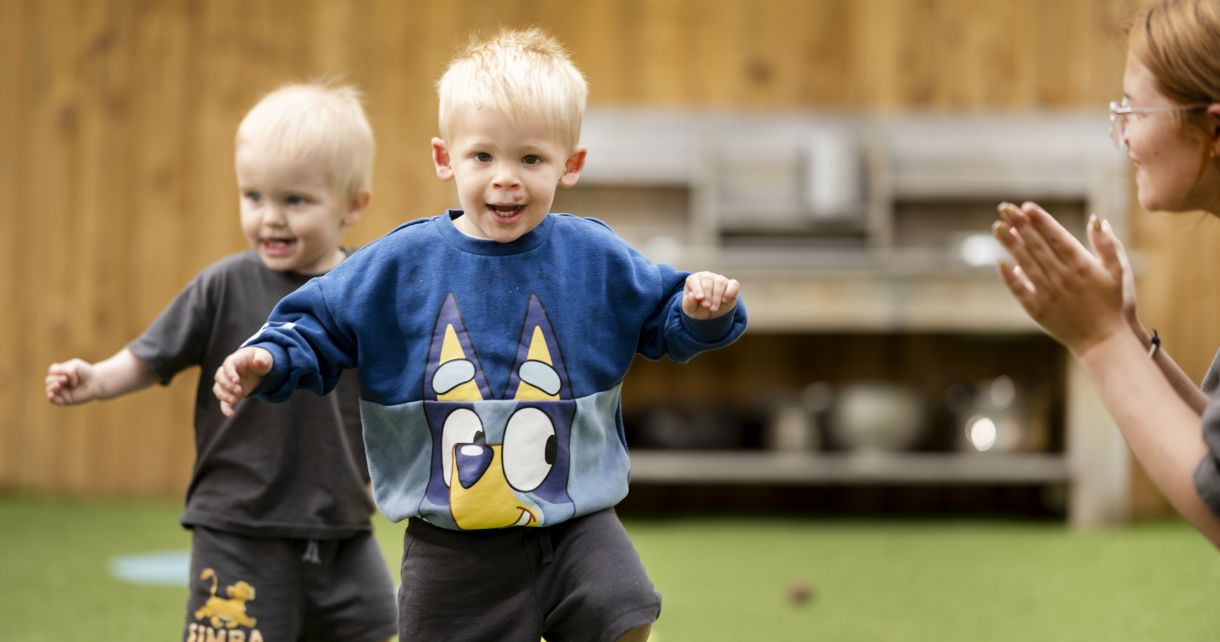
So, whether you’re racing around the garden, testing out your superhero yoga pose, or squeezing in some time at a local park, you’ll be supporting your little one’s emotional wellness and creating positive associations with exercise.
What’s not to love?
Whether it’s encouraging creativity, staying engaged, or helping your little one to identify and understand their emotions, there are many ways to support their emotional well-being.
Need more advice and inspiration? Check out our blog, where you’ll find articles on everything from tips for working parents to how to help your child settle into nursery.
by Busy Bees
Published: 02/06/2026
Share Blog
by Jenny Shaw 01/09/2026
5 min read

by Busy Bees 29/07/2026
6 min read
by Busy Bees 24/07/2026
7 min read

by Busy Bees 24/07/2026
5 min read
by Busy Bees 08/07/2026
5 min read


