Child Development & Learning
7 min read
1
Child Development & Learning
7 min read
7 min read
7 min read
Of the many questions that besiege our brains as parents, one strikes fear into the hearts of even the most unflappable amongst is, such is the unknowable-ness of the topic.
‘Will my child be able to make friends?’
It’s the type of innocent question to which the answer seems obvious… until you mull it over, at which point you forget everything you’ve ever known about making friends.
Because it’s a bizarre concept, isn’t it? There’s no rulebook. No plan. You just sort of… do stuff with people until they become the people you regularly do stuff with.
But that answer won’t satisfy your parental anxiety; especially if your little one is preparing for the always exciting, sometimes frightening adventure that is nursery.
Not to mention the fact that early years friendships often fall into the ‘expectation vs reality’ category as they rarely (if ever) function quite as we imagine they will.
Which is mostly down to the fact that that you can’t remember exactly how you made friends as a child. Your memory lies to you. You have a general idea, but nothing specific to draw from.
And so, with that in mind, we thought we’d share some observations on early years friendships, exploring what they are, why they’re important, and, how you can support your little one as they take their first steps into friendship.
FYI: In this blog, we’ll be focusing on children aged between 3 – 5. That said, some tips are universal, and it never hurts to have a few extra parental tips in your toolbox.
Unless you possess seriously impressive powers of recall, chances are you don’t remember your earliest friends, but they’ll have made a huge impact on you.
You see, while early friendships may seem simple, they’re actually the foundation upon which several key aspects of your little one’s development is built.
From developing empathy and kindness to building their confidence and emotional resilience, those early friendships are hugely important, even if they seem superficial.
They’re also a key factor in your little one’s emotional well-being, helping them to feel safe and comfortable, as well as navigate bigger emotions for the first time.
But early years friendships aren’t exactly what we imagine them to be. We sort of… simplify them and present them as little-person versions of adult friendships.
And that’s very much not the case.
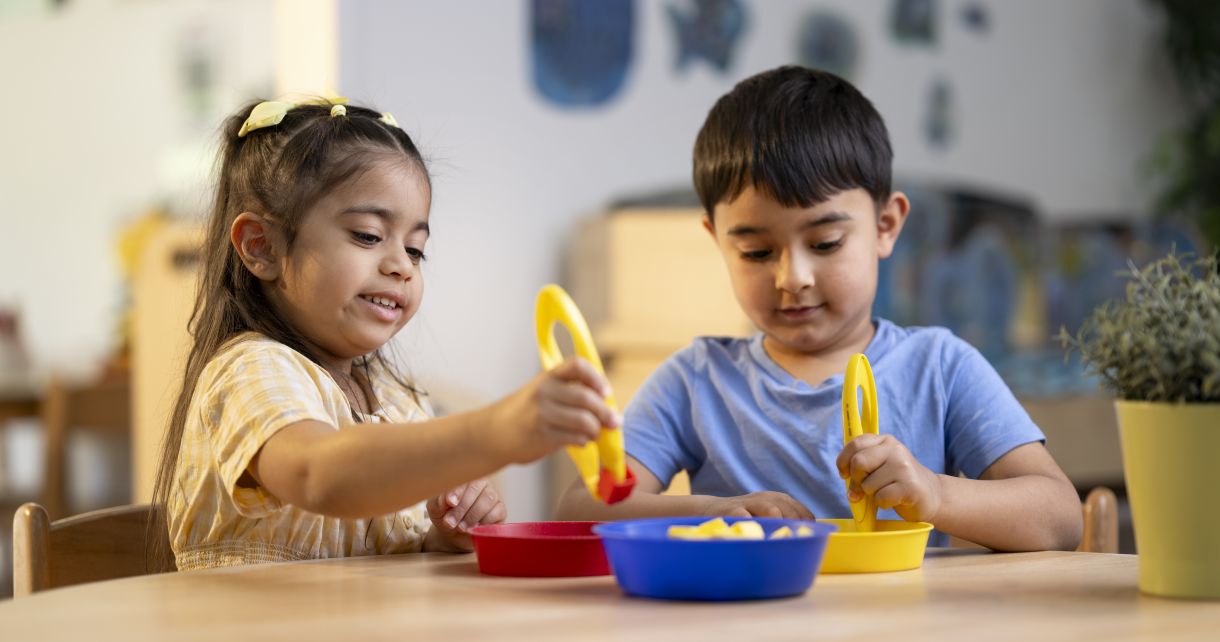
If your little one is taking their first steps into the big, brilliant world of making friends, you’ve probably noticed that their ‘best friend’ is actually more of a rotating cast.
You may also have noticed more than a few, well… disputes.
And that’s totally normal. According to Psychology Today, in the early stages of children’s friendships (i.e. between 3 – 6 years) children view each other as momentary playmates, with friendships rooted in shared interests and proximity.
Essentially, their early friendships are based on other children being nearby, doing the same things. (Hence the inevitable, but healthy clashes over toys and turns.)
That said, studies have shown that many preschoolers who identified each other as friends still did so several months later.
What’s more, navigating the joy and frustration of early friendships is an essential part of your little one’s development, so it’s important to nurture and encourage their friendship-making efforts.
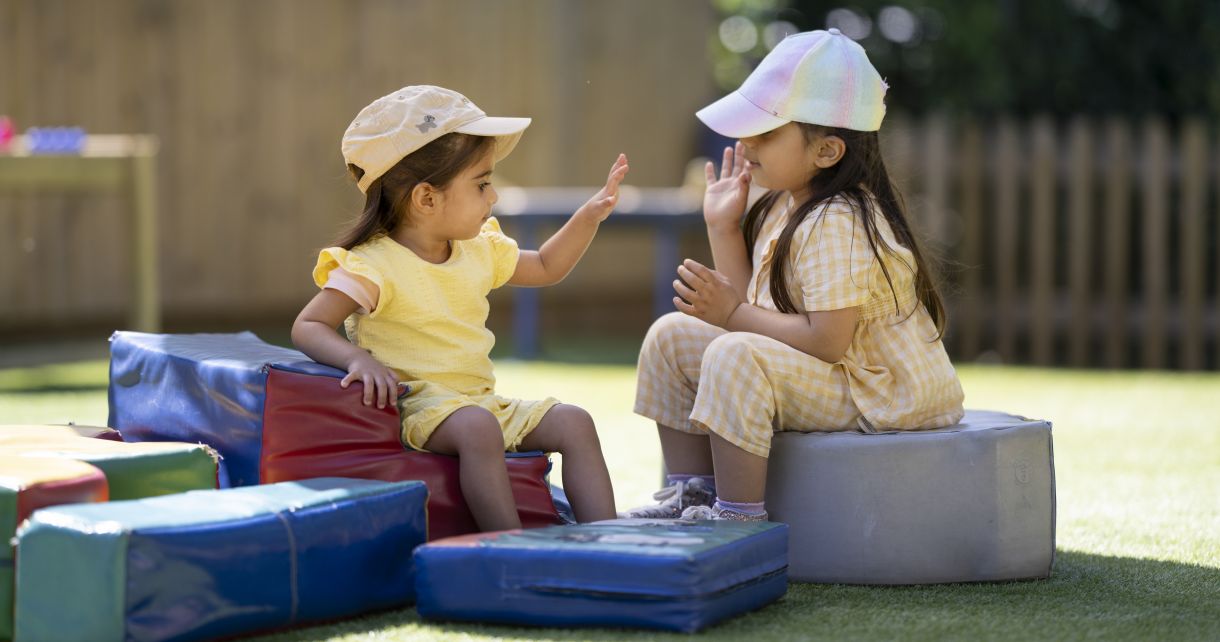
And that’s without discussing parallel play, which is when children play near each other, often with the same materials, but not necessarily together.
So, with all that in mind, how do you help your little one make friends?
Children are wonderfully, irrepressibly talkative. They live in broadcast mode; forever sharing their thoughts with an honesty that adults can only dream of.
And while that’s brilliant (and it is!), it’s important for your little one to learn friendship is about listening as much as talking.
Between the ages of 3 – 5 children are still learning how the flow of conversation works, which they’ll need as they begin to form those all-important early friendships.
At this stage, your little one will look to you as a role model, mimicking your patter and conversation style. (Your language, too, so be mindful!)
But don’t worry about anything formal, just practice asking open questions throughout your day; the types of questions that kickstart those brilliant and baffling early rambles.
You could ask:
Once they’re off and chatting, be sure to chime in with follow-up questions to keep the conversation flowing; over time they’ll learn the rhythm and flow of conversation, which will have a huge impact on their everyday interactions with early friends.
As a parent of a preschooler, you’ve almost certainly mediated a dispute over a specific toy. And, more specifically, whose turn it is to play with that toy.
As they’re still developing their social skills, young children tend to be a little possessive and can be reluctant to relinquish something they’re enjoying.
It can be challenging, though. At this stage, your child is still learning that other people have wants and feelings, which is a gigantic concept to wrap their brains around.
But with a little practice and plenty of encouragement, your little one will learn the importance of sharing, which they’ll begin to apply at playtime.
There’s no playbook for this, and it’s far from an exact science. Simply practice taking turns at playtime, encouraging your child to share, and praising them when they do.
It can be a little tricky, as each child is unique, and will have a slightly different approach to play, so a hefty dose of parental perseverance may be required.
That said, there are a few tried-and-true activities that you can easily weave a little turn-taking magic into, such as building a tower together, playing an age-appropriate board game, or simply turning the pages of a book.
However you choose to approach it, teaching your child about turn-taking will help them to make friends, at nursery and beyond.
To trot out a cliché, early friendships can be emotional rollercoasters.
From the dizzying rush of making a new friend at playtime, to the all-consuming frustration of bickering with that same friend over who’s turn it is on the slide.
And while that may sound trivial, to your child it’s anything but.
As they meet new people, your little one will experience a broader range of emotions than ever before, and without you present as a safety net, it can be overwhelming.
And the more overwhelmed your child is, the harder they’ll find it to make friends, which, if we’re being honest, is a daunting prospect for adults, let alone little ones.
But there’s plenty you can do to help them navigate these choppy emotional waters, starting with helping them learn to identify and understand their emotions.
There’s no fixed way to do this, and whatever works for you is valid, but you might start by simply naming your little one’s emotions as they experience them.
For example, if they’re sad about something, use that word. Try saying: “I can see that you’re sad. I wonder what’s made you feel that way.” If they’re frustrated, ask them ‘what’s frustrating you?”
You’d be surprised how powerful the act of identifying emotions can be, even for tiny brains. To identify something—especially something scary—is to take a step closer to understanding it, which can be calming and grounding.
It can also be helpful to link your child’s emotions to physical sensations, such as that telltale wobbly tummy that accompanies anxiety; or the sometimes literal heat of frustration.
It’s a concept known as whole body emotions,and it’s key in helping your little one better understand their feelings, which, in turn, helps them in their friend-making.
If you’ve ever felt that frozen-to-the-spot, deer-in-headlights fright of wracking your brain for an icebreaker at a social gathering, imagine how your little one feels when they’re confronted by the same prospect. (They can’t even complain about weather.)
Unless your little one is the ultra-confident, always-boisterous type—and if they are, go them!—they may need a little nudge to come out of their shell.
So, if your child is on the shy side, it may be helpful to suggest a few simple questions they could ask others to get the ball (figurative and literal) rolling.
These kid-friendly conversation starters don’t need to be complex. Think ‘hello, my name is…’ or ‘can I play, too’, and you’re in the right ballpark.
As with turn taking and sharing, this is something you can practice at home. Not to the point that you’re sending your little one off with a fully-fledged script, but just enough to give them a little confidence boost.
And harness their natural curiosity! Ask them what types of questions they could ask new friends; you’ll be surprised by how thoughtful and perceptive their ideas will be.
Who knows? Maybe you’ll pick up a handy icebreaker or two for yourself.
And so, we round out our list of ways to help children make friends with that most inevitable part of children making friends: arguments.
Whether it’s a game gone awry, a dispute over a toy, or simply emotions bubbling over after a stimulating day, arguments will happen.
Think of your friendship group. Your absolute go-to people.
You’ve argued at some point, right?
Except you possess several conflict-resolution must-haves that your little one is still developing, from the capacity for self-reflection to the vocabulary to articulate what’s sent you on a one-way trip to temper town. (We’ve all visited at some point.)
Teaching your little one to handle those early disputes—no matter how trivial they seem to you—is a key part of helping them forge friendships.
And it’s especially true for children growing up without siblings of a similar age, who may be a little less practiced at handling arguments.
As you can imagine, this will look slightly different depending on your child’s demeanour and stage of development, but a few fundamentals are universal:
Unlike earlier entries on this list, this isn’t typically something you can role play beforehand as it hinges on there being a dispute, but you can teach your little one to recognise and understand conflict through books and stories.
Conflict in childhood friendships happens, but by teaching them how to handle it, you’ll be helping your little one on their friend-making adventure.
And there we have it. A few handy ideas to help your little one make friends. It’s not an exact science, and each child will respond differently, but you can help them to navigate early friendships, with all the joys and frustrations they bring.
Need more parenting advice? Check out our blog, where you’ll find articles on everything from meditation for children to helping your child settle into nursery.
Need a nursery? Find your nearest Busy Bees today.
by Busy Bees
Published: 24/07/2026
Share Blog
by Busy Bees 14/10/2026
7 min read

by Busy Bees 13/10/2026
5 min read
by Jenny Shaw 01/09/2026
5 min read

by Busy Bees 29/07/2026
6 min read

by Busy Bees 24/07/2026
5 min read


