Parenting Resources
5 min read
1
Parenting Resources
5 min read
5 min read
5 min read
On average, 9 children are killed or injured on UK roads each day, according to research published by road safety charity Brake.
It’s a sobering statistic that underscores the importance of teaching children the basics of road safety at the earliest possible stage, equipping them with the skills to recognise and avoid danger.
But it’s a difficult balance to strike. Too much information could overwhelm or frighten your little one; too little could leave them vulnerable to the risks of the road.
With that in mind, we’ve put together a guide to road safety for children, packed with practical tips and talking points; from the basics of the Green Cross Code to finding safe places to cross the street.
But before we dive in, let’s define some terms, shall we?

Broadly speaking, road safety refers to a variety of methods for staying safe around roads, preventing harm from cars, bikes, buses, trams, and even other pedestrians.
But as a phrase, ‘road safety’ is imperfect. It’s often tossed around as a bit of a catch-all, which risks minimising its complexity, reducing the concept to a buzz phrase, rather than a practice.
Because that’s what it is: a practice. A set of skills that can be taught and refined through repetition.
Take the Green Cross Code. As adults, we instinctively observe the fundamentals (i.e. stop, look, listen, think) before we cross the road, but young children won’t have that context yet.
They may recognise that cars are dangerous, but not their agency in avoiding that danger.
In that context, road safety for children becomes, like any teachable moment, an act of repetition. The more they practice, the more they’ll internalise the process.
And that internalisation is crucial. It’ll keep them safe as they make the journey from hand-holding toddlers to independent road users. (A scary prospect in and of itself!)
The importance of road safety only increases as your little one grows and begins to navigate the world on their own. But how do you talk to them about it without upsetting or confusing them?
As with discussing any complex topic with your little one, it’s important to consider their age and stage of development when discussing road safety.
It can be tempting to lead with, well… fear. And while that’s totally understandable—it’s the fastest route to communicating danger—it’s unhelpful in the long-term. It highlights the potentially deadly outcomes, but not what your little one can do to stay safe.
Instead, focus on being a good role model; showing and explaining rather than just telling.
For example, when you’re crossing a road, explain the safety steps (i.e. stop, look, listen, think) as you take them, involving your little one in the process. You’ll be surprised how quickly they’ll learn.
But that’s not to say you should only discuss road safety with your little one when you’re out together, and those everyday conversations are equally important.
And the word ‘conversation’ is key. As you’ve probably already learned, if you lecture your little one they will switch off, their mind drifting off to… wherever tiny minds go when disengaged.
Keep it light; a two-way chat rather than a dry lecture. If you can think of creative ways to discuss the topic (such as stories or rhymes) even better. Whatever helps the message stick.
If you’re eager to keep things as interactive as possible, check out the super helpful road safety activities from the Child Accident Prevention Trust.
Teaching road safety to preschoolers requires you to strike that most difficult of parental balances: emphasising danger without frightening your little one.
So, what do they need to know?
There’s no joy quite like watching a toddler, well… toddle. That first little stroll around a green space; that lazy walk to the shops on a hot day? They’ll be etched into your memory for life.
And, as with almost everything you do with children, those early ambles offer up plenty of teachable moments.
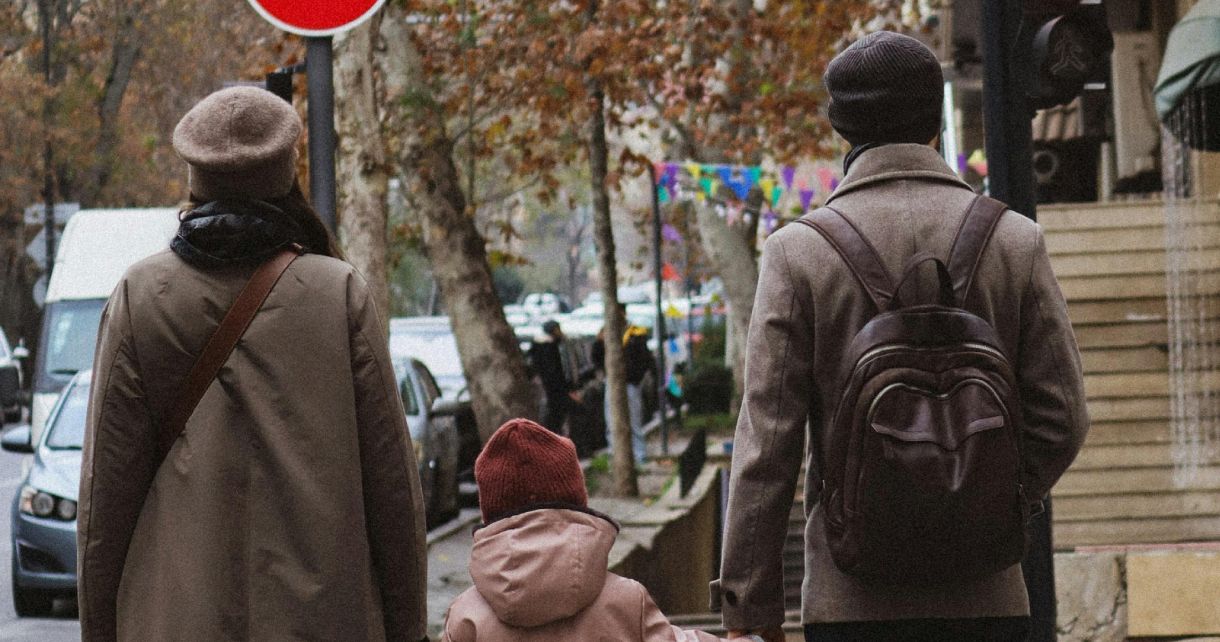
For example, when you’re walking with your little one, handholding is the golden rule. And we won’t sugar-coat it: they may get frustrated (they want to explore!), but it’ll keep them safe.
If your little one is particularly energetic, consider using reigns or a wrist strap to prevent them from pulling away from you and into danger. Be sure to explain this to them, so it doesn’t feel like a punishment.
It’s also wise to make sure your little one is walking on the side of the pavement furthest from traffic, helping to protect them from any unexpected dangers such as careless drivers.
As you’re walking, discuss road safety with your little one; explain the difference between the road and the pavement, what zebra crossings are and how they work; how traffic lights work.
And, of course, at every opportunity reinforce the basics of the Green Cross Code. Say it aloud as you walk. “Stop. Look. Listen. Think.”
They’ll soak up so much knowledge, and it’ll be filed away in their brilliant little brain, forming the basis of a safe, sensible relationship with road safety.
As they get older, you can begin to introduce more complex aspects of road safety, such as the meanings of road signs, what speed limits are, and even the different types of roads they may encounter.
It may seem slightly odd to discuss, say… dual carriageways or coastal roads with your child, but you’ll be surprised at how perceptive they’ll be, especially if you frame it right.
It’s at this point that you can begin to introduce the concept of finding safe places to cross the road, if no designated places are available; a vital skill your little one will need in the future.

Road safety is amongst the most important thing you’ll ever teach you little one; a lesson they’ll carry with them into their adult life, so be sure to take the time to find fun and engaging ways to explore the topic with your little one.
Need for parenting advice? Check out our blog, where you’ll find articles on everything from which childhood illnesses are the most common and how to support your child’s emotional well-being.
by Busy Bees
Published: 02/06/2026
Share Blog
by Busy Bees 14/10/2026
7 min read

by Busy Bees 13/10/2026
5 min read

by Jenny Shaw 01/09/2026
5 min read

by Busy Bees 29/07/2026
6 min read

by Busy Bees 24/07/2026
7 min read


